Yes — chamomile and calendula are compatible with Ayurvedic baby massage formulations. Both herbs share a core therapeutic language with classical Ayurveda: they reduce Pitta-driven inflammation, support skin barrier function, and calm the nervous system. Their active compounds (bisabolol in chamomile, faradiol in calendula) work through mechanisms that ancient practitioners described functionally, even if not molecularly. Rashee Cares Baby Massage Oil includes both herbs precisely because they complement, rather than contradict, the Ayurvedic base.
Reading the baby massage oil ingredients on our bottle can raise a fair question. Chamomile and calendula — both familiar from European herbalism — sit alongside the sesame and coconut base of shishu abhyanga. So is this a genuine formulation decision, or simply a label that sounds good?
As someone who looks at baby massage oil ingredients from a biotech standpoint, I want to know what they’re actually doing at a biochemical level — not just what tradition says they do. This post gives you the full answer: where these herbs come from, what their active compounds are, how those compounds behave on infant skin, and why they belong in a bottle that also carries the weight of Ayurvedic practice.

First: what does ‘Ayurvedic formulation’ actually mean?
Ayurveda doesn’t operate as a closed, regionalist system. At its core, it is a framework of principles — doshic balance, the qualities of herbs (gunas), and the relationship between an ingredient’s taste (rasa), potency (virya), and post-digestive effect (vipak). Importantly, those principles don’t exclude non-Indian plants. Instead, they classify everything through the same evaluative lens.
Shishu abhyanga — baby oil massage — is one of Ayurveda’s most foundational infant care practices. Both the Charaka Samhita and Ashtanga Hridayam describe massage as essential for strengthening muscle, improving sleep, and supporting skin development in newborns. The oils traditionally recommended — sesame, coconut, almond — function as carriers. What herbs are infused into them depends on the therapeutic need.
When we introduce chamomile and calendula into that carrier base, we’re not importing a foreign system. Rather, we’re asking: do these plants, evaluated on Ayurvedic terms, fit the therapeutic intent of shishu abhyanga? As I’ll explain below, the answer is a confident yes.
What chamomile does — and why Ayurveda already recognises it
The science behind chamomile as a baby massage oil ingredient
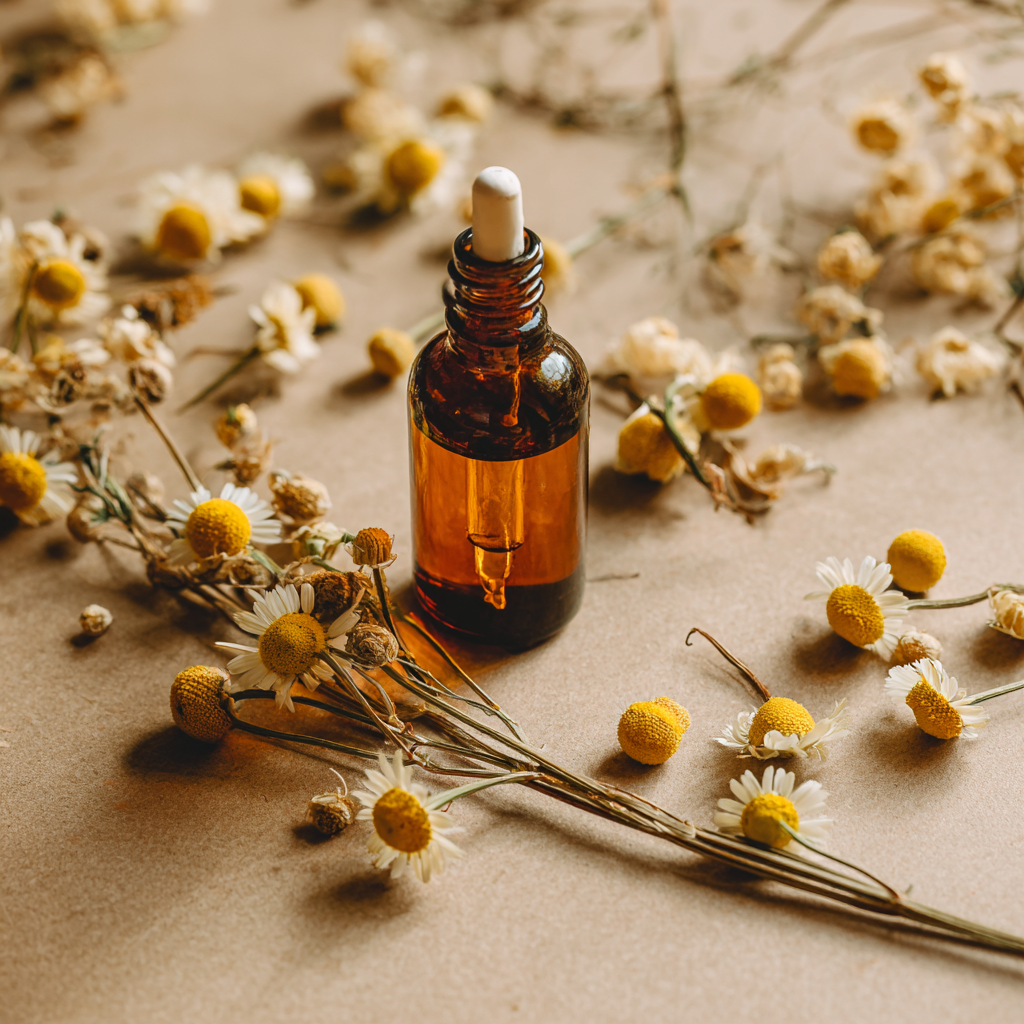
German chamomile (Matricaria chamomilla) has been used medicinally since ancient Egypt and Rome. However, what makes it genuinely interesting from a formulation standpoint is its primary active compound: α-bisabolol, a monocyclic sesquiterpene alcohol that makes up the bulk of its essential oil.
α-Bisabolol is one of the better-characterised anti-inflammatory compounds in cosmetic dermatology. Research published in Nutrients (2022) documented its mechanism in detail: it suppresses pro-inflammatory cytokines — TNF-α, IL-1β, IL-6, and COX-2 — by inhibiting the NF-κB and AP-1 signalling cascades. These are two central inflammatory pathways in skin cells. Additionally, a clinical investigation cited in the same review found that a topical formulation containing bisabolol led to measurable improvement in eczema severity in children.
Crucially for baby skin, bisabolol also promotes barrier repair. Beyond its anti-inflammatory action, it supports keratinocyte migration — the cellular process by which damaged skin closes and regenerates — and has demonstrated antimicrobial activity against Staphylococcus aureus and Candida albicans, both common skin pathogens in infants. Furthermore, the US FDA has granted bisabolol GRAS (Generally Recognized as Safe) status, and the compound is non-irritating and non-photosensitising even at therapeutically active concentrations.
The Ayurvedic lens on chamomile
Chamomile is known in Ayurveda as Babuna. Anne McIntyre, a fellow of the National Institute of Medical Herbalists and member of the Ayurvedic Practitioners’ Association, has documented its classification within the system extensively. Its gunas (qualities) are light and dry; its rasa (taste) is bitter, pungent, and astringent; its virya (potency) is cooling. As a result, it reduces excess Pitta and Kapha and can balance Vata — making it, technically, a tridoshic herb used with awareness.
The cooling, anti-inflammatory potency that Ayurvedic practice assigns to Babuna maps directly onto what bisabolol does at a molecular level: it reduces heat-driven inflammation. Moreover, chamomile is recognised in Ayurveda as a nervine — something that calms the nervous system — and is specifically noted as beneficial for restless, teething, and colicky babies. This overlap between traditions is not coincidence. It is two systems describing the same plant behaviour in different vocabularies.

What calendula does — and why its skin story is remarkable
The science behind calendula as a baby massage oil ingredient
Calendula officinalis — pot marigold — has one of the more compelling evidence bases in botanical skincare. Notably, the European Medicines Agency (EMA) has approved both lipophilic and aqueous-alcoholic calendula extracts as traditional medicinal products for treating minor skin inflammation and aiding wound healing. For a plant-derived ingredient, that is a relatively high regulatory bar to clear.
Its chemistry is layered. The key active compounds include faradiol (a triterpene diol) and its fatty acid esters, flavonoids such as quercetin and isorhamnetin, carotenoids, and polysaccharides. Research published in a 2021 MDPI Cosmetics study confirmed that calendula oil produces dose-dependent reductions in nitric oxide production in macrophages — a direct anti-inflammatory mechanism. In particular, the faradiol esters have demonstrated anti-inflammatory effects comparable to indomethacin in experimental models.
For skin healing, calendula’s flavonoids activate PI3K metabolic pathways in fibroblasts and the NF-κB pathway in keratinocytes. Both actions stimulate cell migration, proliferation, and granulation tissue formation — the processes needed to close and repair damaged skin. A systematic review in Wound Repair and Regeneration (2019), covering 7 animal studies and 7 clinical trials, found consistent evidence for faster resolution of inflammation in calendula-treated groups.
For diaper rash specifically, a randomised clinical trial found calendula ointment outperformed aloe vera in reducing dermatitis in newborns. For parents in India, where heat and humidity accelerate nappy rash, that result is not a minor footnote.
The Ayurvedic lens on calendula
Calendula doesn’t carry a classical Sanskrit name the way ashwagandha or brahmi do — it arrived in India later. However, it appears increasingly in contemporary Ayurveda-adjacent formulations, particularly for skin. When evaluated through Ayurvedic properties, its cooling nature, wound-healing action, and affinity for rakta dhatu (blood tissue) make it a coherent ingredient in shishu abhyanga formulations targeting inflammation and rash-prone skin.
More practically: the herbs traditionally recommended in Ayurvedic infant care — manjistha, neem, lodhra — share functional properties with calendula. All are anti-inflammatory, antimicrobial, and skin-healing. Consequently, calendula functions not as a replacement for those herbs, but as a companion working through overlapping mechanisms.
The compatibility question — and where the baby massage oil ingredient conversation gets interesting
The concern some parents raise is understandable: if Ayurveda recommends sesame and coconut oil bases for infant massage, do European flower extracts disrupt that system? The short answer is no — not if the formulation is thoughtfully done.
Both chamomile and calendula are lipophilic, so they infuse well into oil carriers. Their active compounds — bisabolol, faradiol esters, flavonoids — are fat-soluble and integrate into the carrier without altering its base properties. If anything, bisabolol’s known ability to act as a dermal penetration enhancer means that other actives in the oil may reach deeper skin layers more efficiently. That makes careful formulation more important, not less.
From a dosha perspective, both herbs are predominantly Pitta-pacifying, which aligns directly with the primary concern in infant skin: irritation, heat rash, and contact dermatitis. A sesame-based oil with chamomile and calendula therefore has a coherent Ayurvedic logic — a warm, grounding Vata-balancing base, with cooling botanical additions that address Pitta-driven skin complaints.
One important caveat: babies with known sensitivities to the Asteraceae family (the daisy family) should be patch-tested carefully, since both chamomile and calendula belong to it. A patch test before full application is always the right starting point with any new ingredient on infant skin.
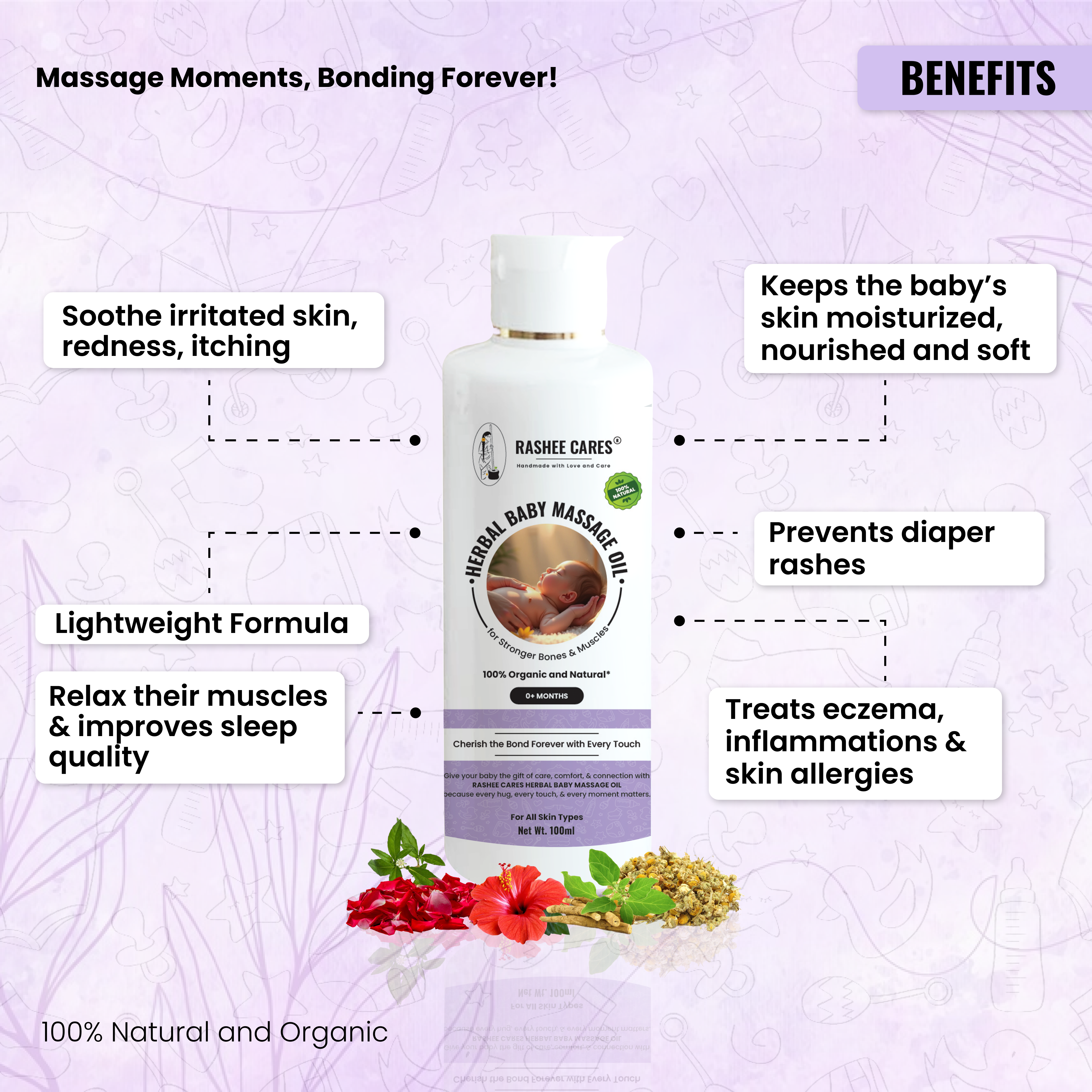
Why we chose these ingredients for Rashee Cares Baby Massage Oil
When Rashee Cares developed our baby massage oil formulation standard, we weren’t choosing between traditions. Instead, we were asking what a baby’s skin actually needs, and which ingredients across the global botanical pharmacopoeia address that most effectively and safely.
The result is a formulation built on a cold-pressed sesame and coconut oil base, infused with chamomile and calendula. The base does what shishu abhyanga has always done — it grounds the nervous system, nourishes the skin barrier, and supports warmth and circulation. The botanicals do what the evidence says they do: reduce topical inflammation, support skin healing, and offer gentle antimicrobial action without fragrance or synthetic preservatives.
This is not a European product wearing Ayurvedic clothing. Rather, it is a formulation that understands both traditions well enough to recognise that their intentions, for infant skin, converge.
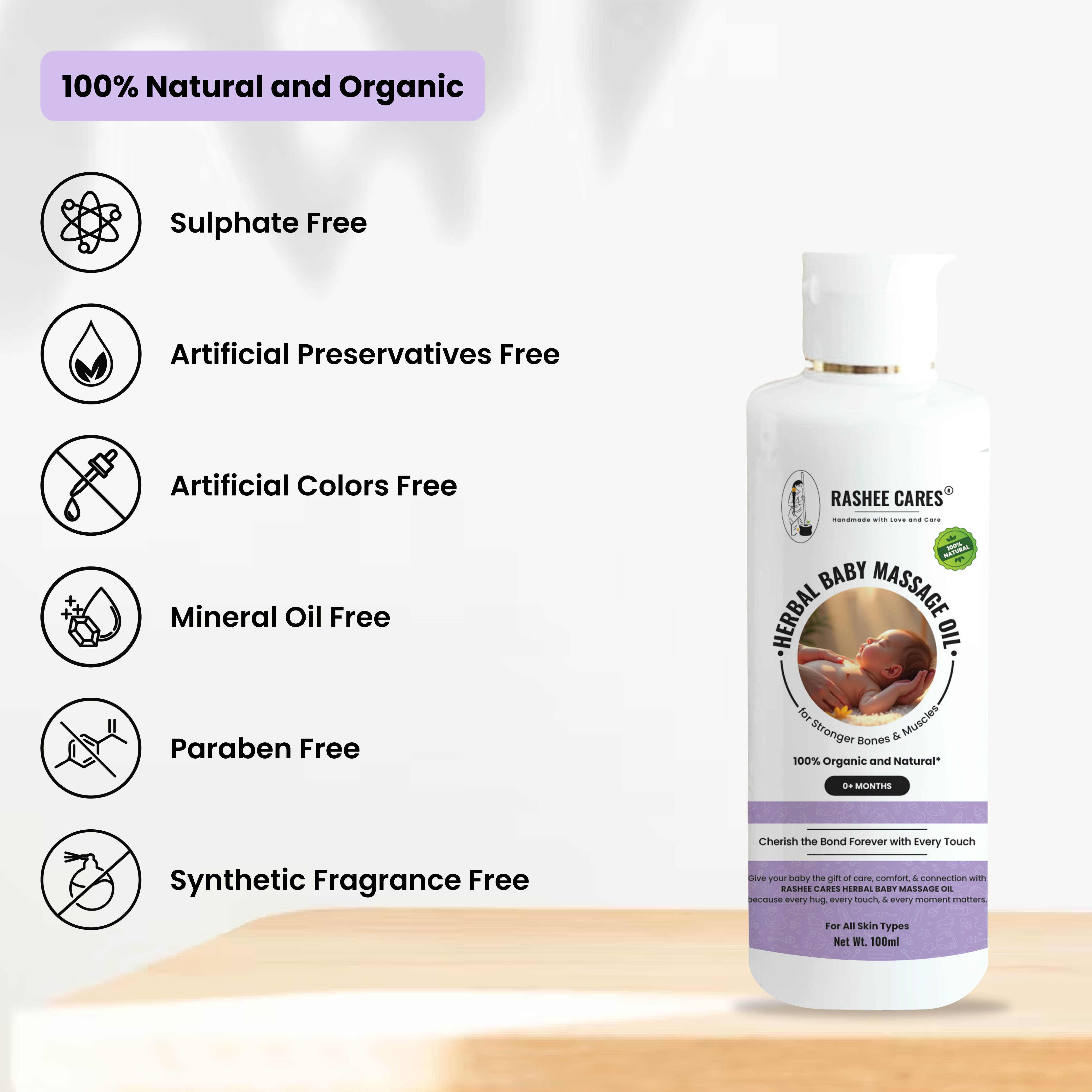
The question for parents
When you choose a massage oil for your child’s skin, you deserve to know not just that an ingredient is ‘natural’ or ‘herbal,’ but what it is actually doing — and why it was selected.
Chamomile brings α-bisabolol: anti-inflammatory, barrier-repairing, antimicrobial, and FDA GRAS-assessed. Calendula brings faradiol and flavonoids: wound-healing, anti-inflammatory, and clinically proven against nappy rash. Both map coherently onto Ayurvedic therapeutic principles when evaluated honestly through that framework.
The tradition of shishu abhyanga is about more than the specific herbs. Above all, it is about the practice of daily, attentive touch — warm oil, consistent rhythm, skin-to-skin contact — as a form of infant development and bonding. The best oil for that practice is one that works, is safe, and whose ingredients you can understand. We’ve tried to make that possible with every baby massage oil ingredient we’ve chosen.
References
Eddin, L.B. et al. (2022). Health Benefits, Pharmacological Effects, Molecular Mechanisms, and Therapeutic Potential of α-Bisabolol. Nutrients, 14(7), 1370. https://doi.org/10.3390/nu14071370
Almeida, I.F. et al. (2021). Anti-Inflammatory Activity of Calendula officinalis L. Flower Extract. Cosmetics, 8(2), 31. https://doi.org/10.3390/cosmetics8020031
Harats, M. et al. (2019). A systematic review of Calendula officinalis extract for wound healing. Wound Repair and Regeneration, 27(5).
Leach, M.J. (2008). Calendula officinalis and Wound Healing: A Systematic Review. Wounds, 20(8), 236–243.
McIntyre, A. (2012). Chamomilla recutita — German Chamomile: Western and Ayurvedic Perspectives. Positive Health Online. https://www.positivehealth.com
European Medicines Agency (EMA). Assessment report on Calendula officinalis L., flos. EMA/HMPC/179282/2009.
ScienceDirect. (2016). In vitro studies to evaluate the wound healing properties of Calendula officinalis extracts. Journal of Ethnopharmacology.